Catholic chasubles for the celebration of Mass range from full Gothic shapes to more structured Roman forms, with embroidered, woven, printed and hand-embellished decoration. SCAPHA designs include liturgical colors such as green, violet, red, rose and ecru, along with Eucharistic, Marian, IHS, cross and devotional motifs. Many styles also use decorative orphreys, gold trim and coordinated inner stoles.
The chasuble, alb and priest's stole at Mass
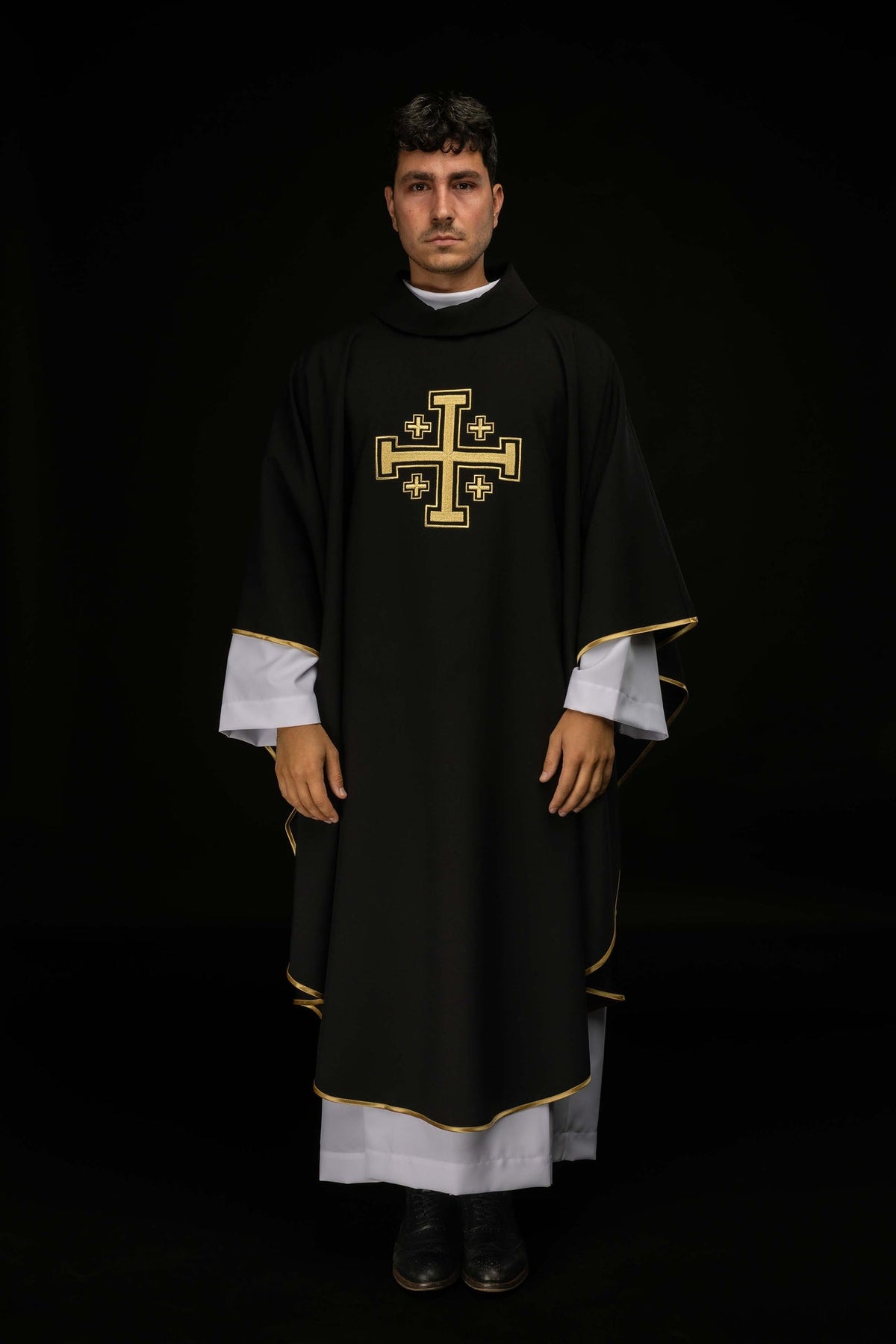
The chasuble is the outer vestment worn by the priest when celebrating Mass in the Roman Rite. It is worn over the alb and stole, so its shape, length and neckline determine how the finished vestment sits over the layers beneath. Other garments have different roles: the deacon normally wears the dalmatic, while the priest's stole is worn under the chasuble. For coordinated vestments and related garments, see the liturgical vestments collection and clergy stoles.
Some priest chasubles come with an inner stole. The embroidered ecru Divine Mercy chasuble, for example, measures 53 in (135 cm), is made from 100% polyester and includes a stole worn inside the chasuble. Its smooth fabric is finished with gold satin trim, and the stand-up collar frames the neck cleanly when the vestment is worn over an alb.
Liturgical colors and celebrations
Liturgical chasubles are offered in colors that correspond to the Church calendar. Green is used for Masses of Ordinary Time, while violet or purple is associated with Advent and Lent. Red is used for celebrations including Pentecost, Palm Sunday and Good Friday, and white is used for seasons and feasts such as Christmas and Easter as well as Marian celebrations. To narrow the selection by color, browse green chasubles, purple chasubles and red chasubles.
Ivory and ecru are light shades rather than separate fibers, and they appear across both smooth and patterned fabrics. One ecru design has a delicate jacquard ground with a gold-trimmed edge and Eucharistic embroidery, while another cream-toned style uses a printed PAX medallion with gold and brown botanical ornament. For light neutral shades, browse ivory and ecru chasubles.
Gothic and Roman shapes, neckline and fit
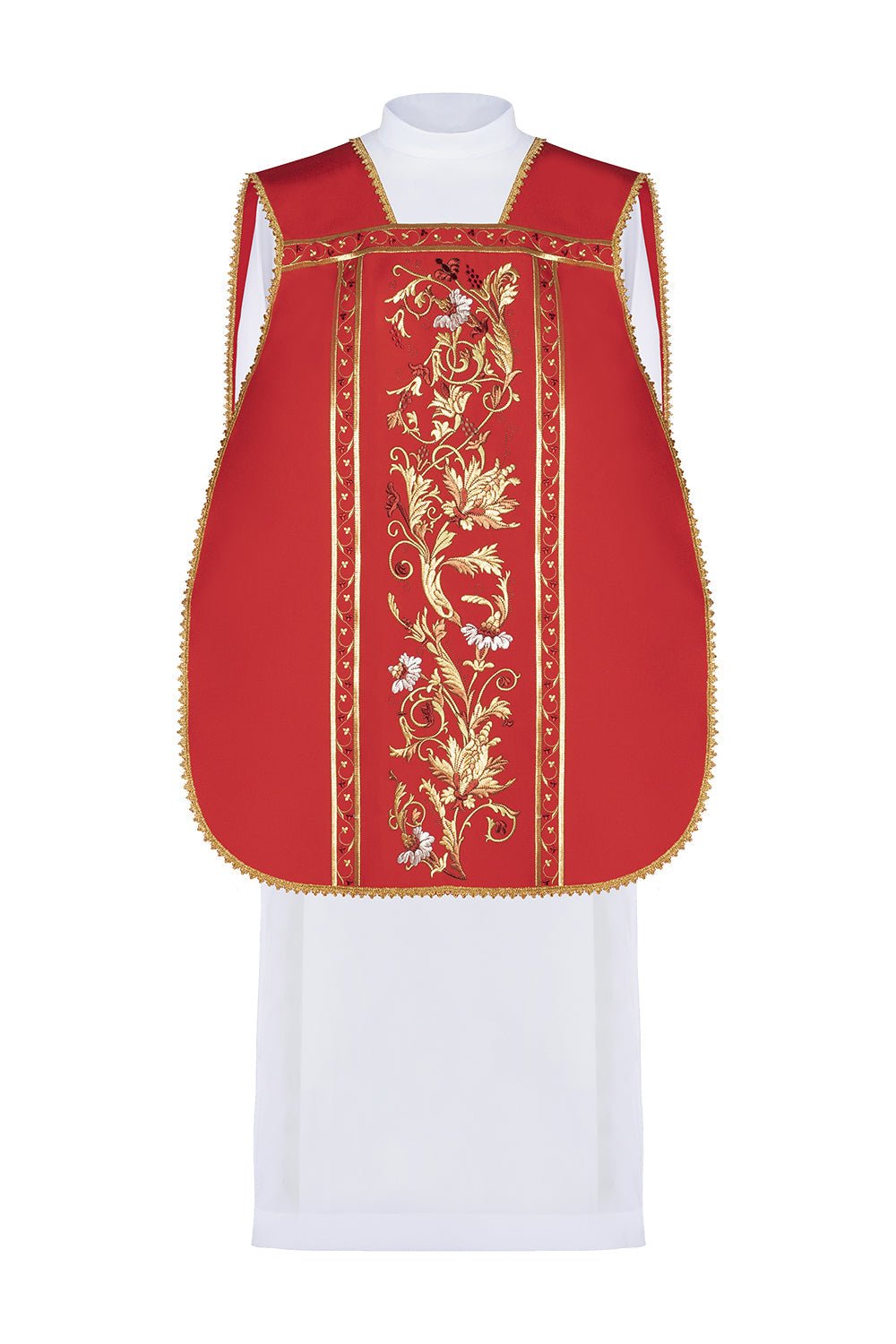
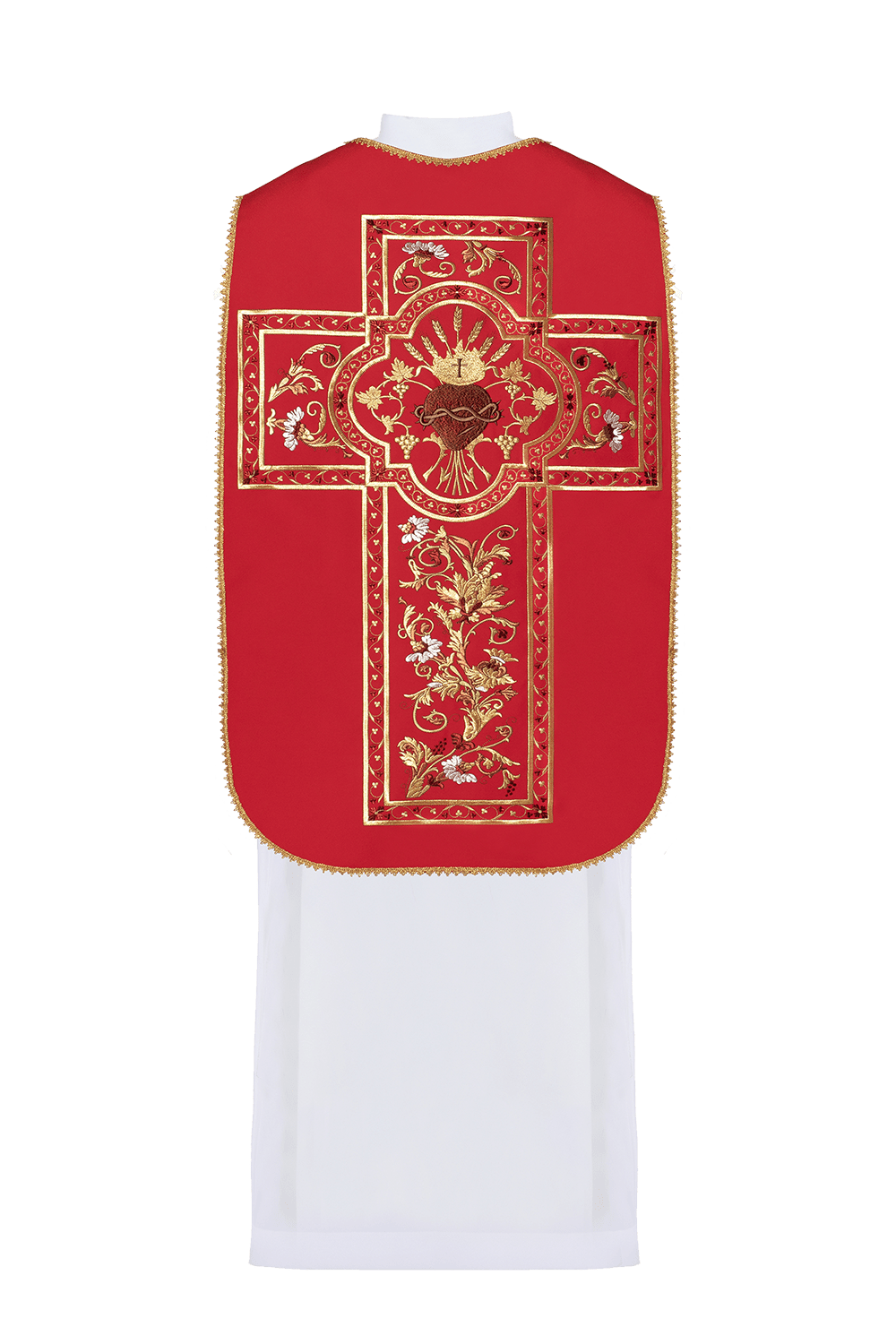
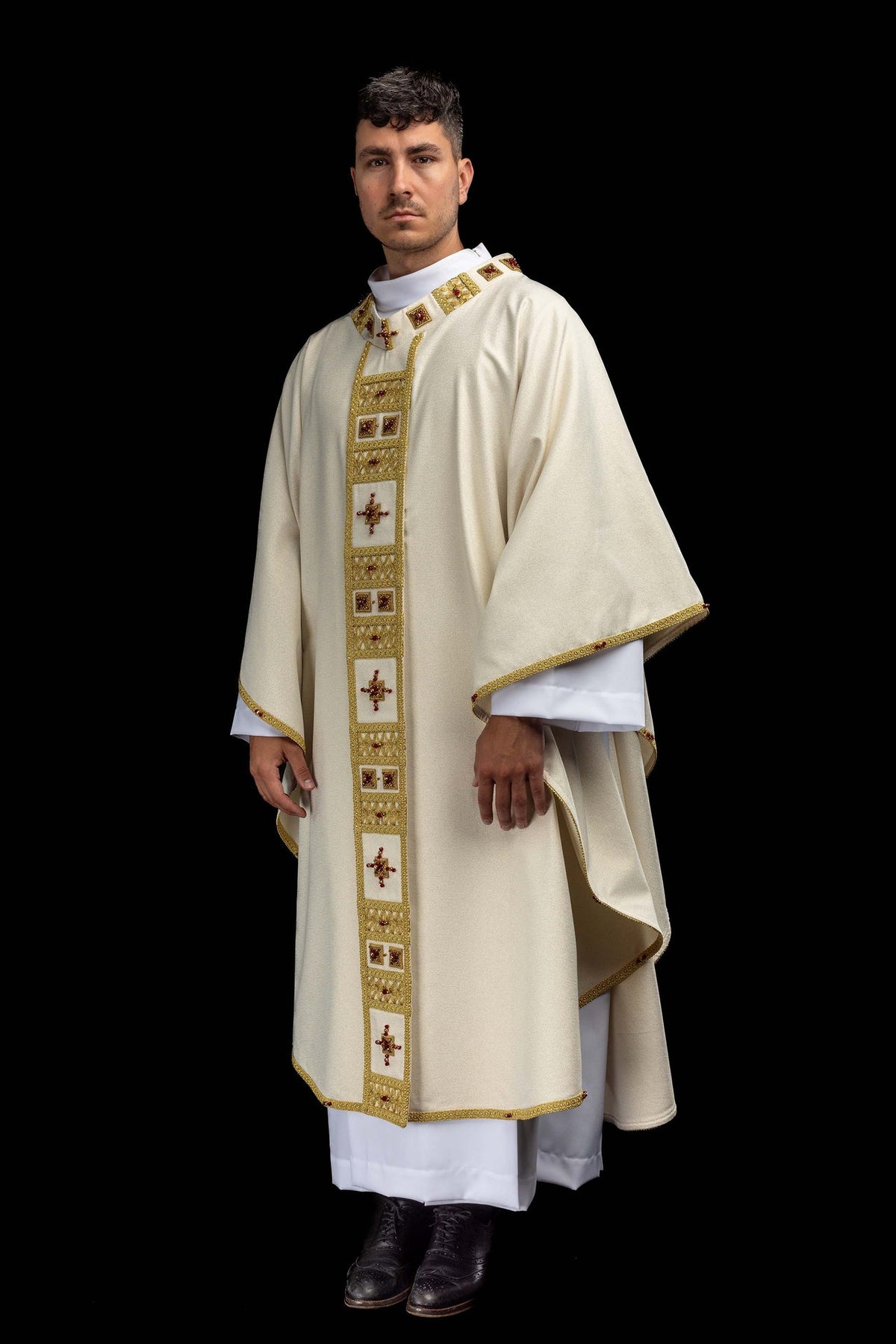
Gothic chasubles have a fuller, more rounded shape that extends over the arms, while Roman or fiddleback forms have cut-away sides with defined front and back panels. The ecru embroidered chasuble with matching stole uses a classic Gothic cut, giving the garment broad coverage through the shoulders and sides. Roman styles create a narrower silhouette, as seen in the Roman chasuble with IHS, wheat and grapes, which measures 41 in (104 cm) in length. See Roman chasubles for this more structured form.
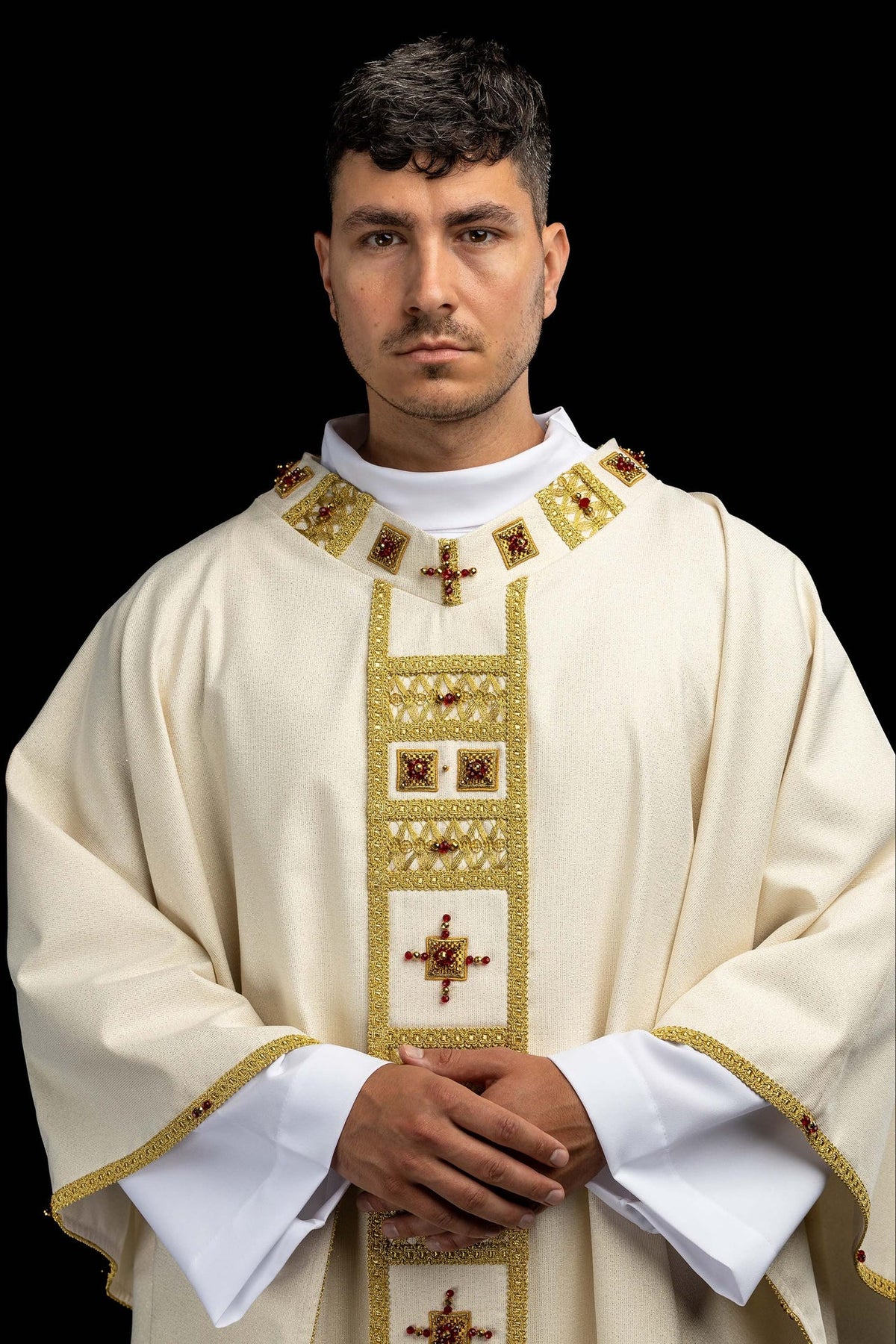
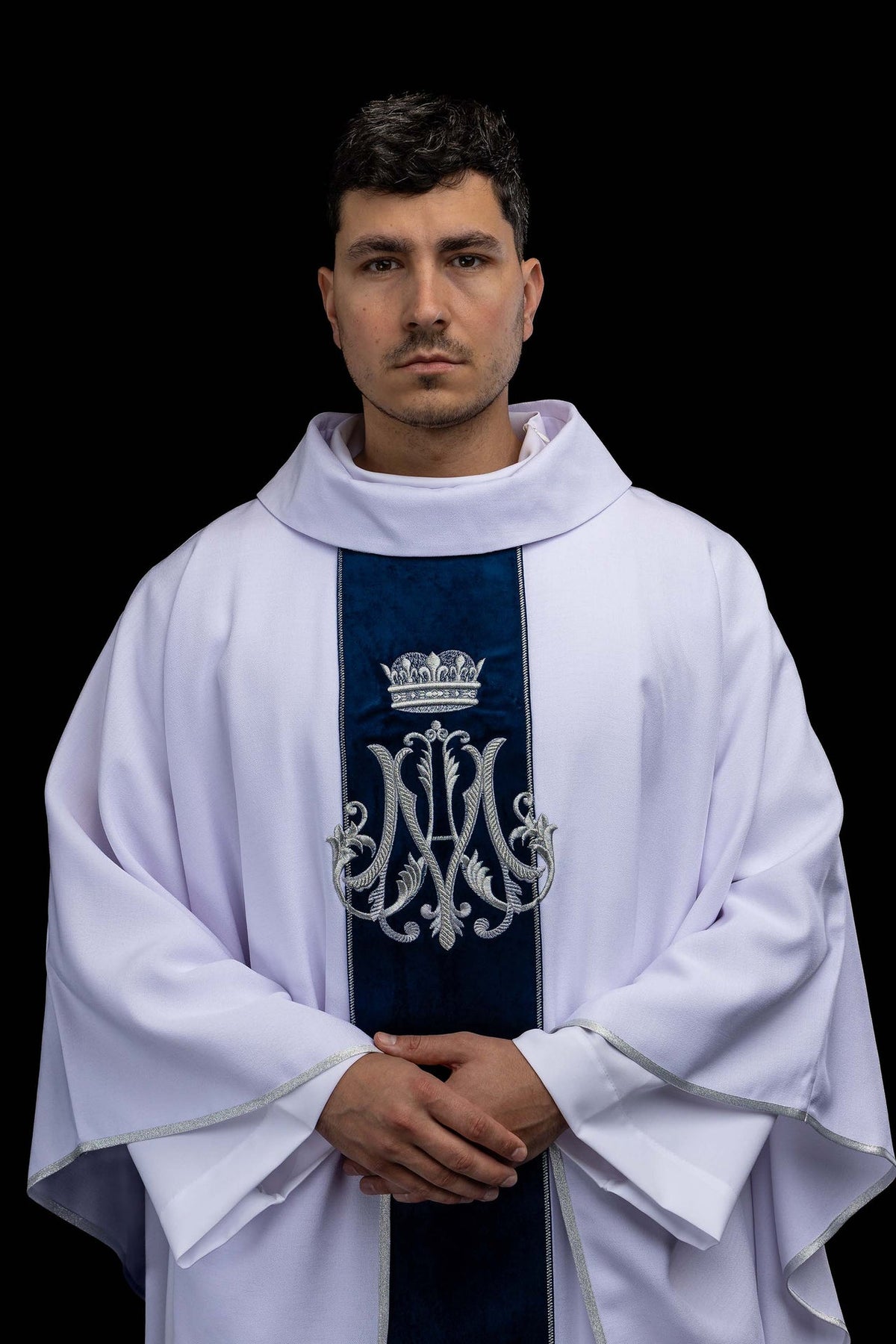
Neckline construction also changes the appearance around the collar. Some designs use a stand-up collar, including the ecru Marian chasuble with Marian motif and the Divine Mercy design described above. Because chasubles are worn over an alb and stole, the neckline should sit neatly without obscuring the central decoration or pulling the body of the vestment out of line.
Crosses, IHS, Eucharistic and Marian decoration
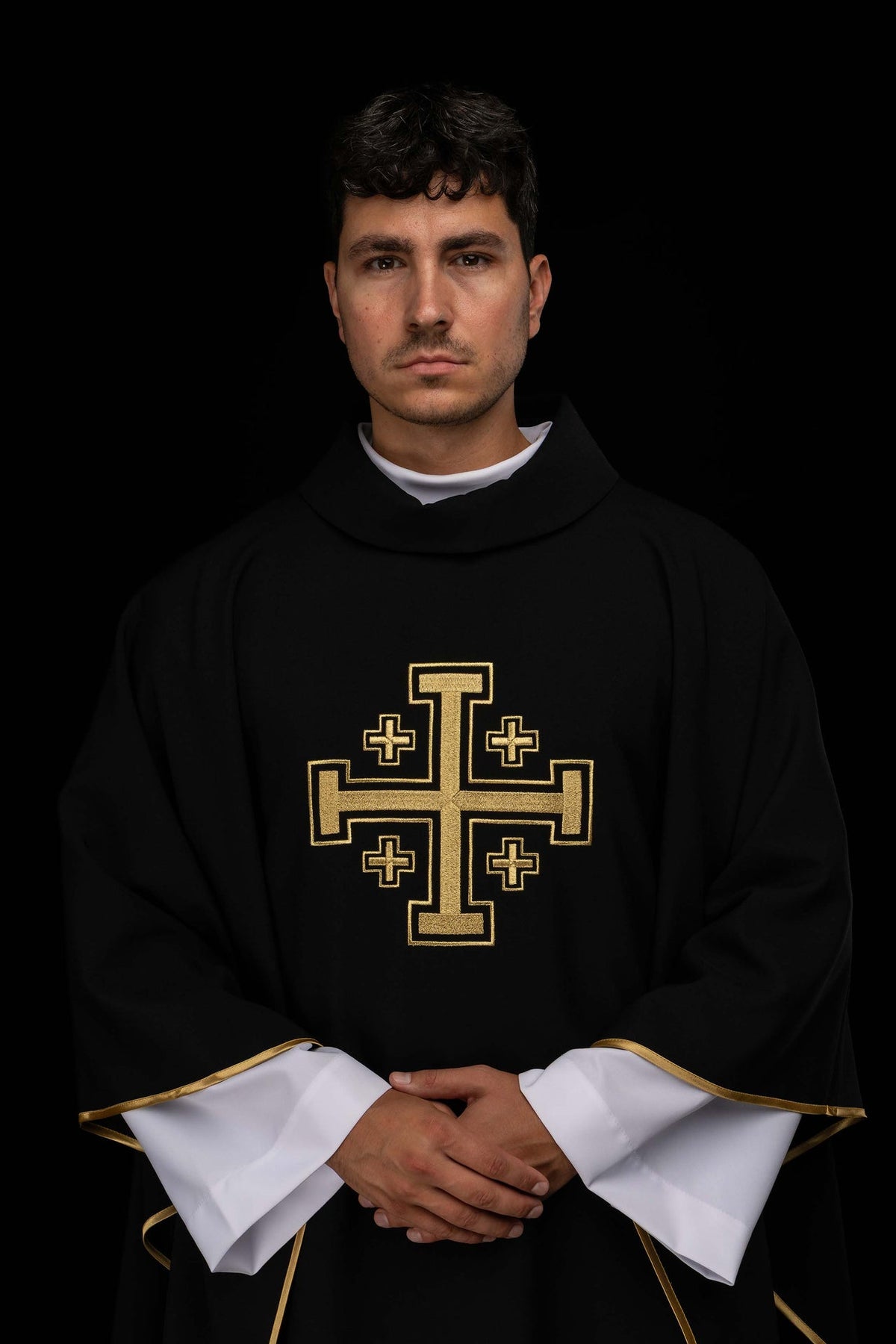
Decoration on chasubles for Mass often centers on symbols that remain clearly visible from the front or back. The ecru Eucharistic chasuble features a chalice with altar bread and the IHS monogram, surrounded by vine and wheat embroidery in gold thread. Another ecru design places an embroidered IHS chalice on an orphrey, while a cross-bearing IHS chasuble carries a cross on the back as well as the front decoration.
Other designs use devotional imagery or Marian symbols. The embroidered ecru Divine Mercy chasuble has an orphrey with the image of Divine Mercy and the inscription “Jesus, I trust in You,” while a Roman chasuble is decorated with the Sacred Heart of Jesus. Some Marian designs pair embroidered Marian symbols with blue accents; browse Marian chasubles for additional vestments centered on Marian imagery.
Agnus Dei also appears as a Eucharistic motif. One ecru chasuble uses gold and burgundy thread for the Lamb of God, giving the central embroidery a strong contrast against the lighter ground. These motifs make it easier to select a vestment whose decoration matches the celebration, devotion or church setting without relying on color alone.
Embroidery, woven patterns and printed designs
Decoration can be built into the fabric, stitched onto a panel or applied as a printed image. Jacquard chasubles use a woven pattern in the fabric itself, while embroidered orphreys add raised threadwork to the central decorative band. A purple design uses a sublimated cross that spans the full width of the chasuble, showing how printed decoration can create a large uninterrupted motif across the garment.
The cream PAX chasuble uses a printed PAX symbol inside an ornate round medallion, with vertical and horizontal bands forming a cross and botanical ornament extending through the design. By contrast, the handcrafted Marian chasuble 7006 combines a richly embroidered Marian symbol with blue velvet at the collar, gold Italian trim and 272 hand-sewn natural stones, including gold and blue faceted hematite. The woven jacquard fabric contains cotton, adding a different surface character from smooth polyester styles.
Some designs rely on velvet for contrast rather than making the entire garment from velvet. The Marian liturgical chasuble with ecru velvet orphrey has a velvet decorative band worked with gold embroidery, so the change in texture emphasizes the central ornament. Printed, embroidered and woven treatments each produce a different visual weight, from flat all-over imagery to raised, highly dimensional decoration.
Fibers, fabrics, decorative panels and included pieces
SCAPHA chasubles use several supported fabric constructions. Some styles are made from 100% polyester, including the Roman IHS, wheat and grapes chasuble and the embroidered Divine Mercy design. Another polyester chasuble uses a linen weave, which describes the surface structure rather than establishing linen fiber content. A separate embellished style is made from 80% polyester, 10% bamboo viscose and 10% microfiber. Some Italian jacquard fabrics contain cotton, while jacquard itself describes a woven pattern rather than a fiber.
Decorative finishes include velvet orphreys, gold satin edging, embroidered panels and hand-applied stones. The Roman IHS, wheat and grapes chasuble is finished with gold satin trim and comes with an inner stole, while the Divine Mercy chasuble also includes an inner stole.
Rose chasubles provide a distinct color option for celebrations where rose is permitted; browse rose chasubles for that shade. Browse the available SCAPHA chasubles to choose a color, shape and decorative style for your church.
Frequently Asked Questions
Can the same chasuble be worn for weekday and Sunday Masses?
A chasuble can be worn for either weekday or Sunday Mass when its liturgical color and design suit the celebration. The calendar and the rank or character of the Mass determine the appropriate color.
When is rose used instead of purple?
In the Roman Rite, rose may be used on Gaudete Sunday in Advent and Laetare Sunday in Lent. It is optional rather than required, so violet or purple may still be worn on those days.
Does Marian embroidery allow a blue chasuble for ordinary Roman Rite use in the United States?
No. Marian embroidery does not make blue an ordinary liturgical color for Roman Rite Masses in the United States. White is used for Marian celebrations, while blue decoration may appear as an ornamental detail.
How can I tell whether a stole comes with a chasuble?
Check the individual product details for included pieces. Some SCAPHA designs, including the Divine Mercy chasuble and the Roman IHS, wheat and grapes chasuble, specifically come with an inner stole; inclusion should not be assumed for every design.